Verify an offshore casino licence and spot scam patterns
 Available in GB
A casino licence in the operator’s footer is only as good as the register entry behind it. This page walks through the verification procedure for the three offshore regimes most British players will encounter (Curacao under the LOK, Anjouan and Malta), explains how to read the UK Gambling Commission’s own public register, and catalogues five recurring failure modes that independent complaint databases have documented at non-GamStop sites. None of these steps requires specialist knowledge. All of them are routinely skipped by players, and almost all complaints recorded on casino.guru and AskGamblers begin with a verification step the player did not take.
- Check the UK Gambling Commission public register first
- Confirm a Curacao or Anjouan licence on the regulator’s own portal
- Cross-reference the corporate entity behind the brand
- Recognise five recurring offshore failure modes
- Document the verification before you deposit
- Know what to do when an offshore withdrawal stalls
- If verification is a stress signal, treat it as one
- Make verification the default, not the exception
- About the author
Check the UK Gambling Commission public register first
The verification cascade starts with the UK Gambling Commission, even if the casino itself is offshore. The reason is straightforward: if the operator does hold a UKGC licence, the casino is by definition on GamStop under social-responsibility code 3.5.5, and there is no offshore question to answer. If the operator does not hold a UKGC licence, the offshore licence is the only authority it has to operate, and the verification steps below become essential. The UKGC public register is the canonical place to confirm UK licensing status. The status field on the register entry shows one of four states: Active, Suspended, Revoked or Surrendered. Anything other than Active means the operator is not authorised to take British custom.
Search the register by company name, by licence number, or by brand if the brand is the same as the trading name. If you find the operator on the register with status Active and the licence has the relevant category for online casino, the site is a UKGC casino and not a non-GamStop casino regardless of what its marketing says. If you do not find the operator on the register, that is also a definite answer: the site is operating offshore. Both the Gambling Commission and the supporting infrastructure of section 33 of the Gambling Act 2005 treat this as a binary status.
Confirm a Curacao or Anjouan licence on the regulator’s own portal
Once you know the operator is offshore, the next step is to identify the licence in the footer and check it on the regulator’s register. The Curacao Gaming Authority maintains an online register at cga.cw that lists current LOK licensees. A licence under the LOK takes the form OGL/2024/####/####, where 2024 is the year of issue and the two number blocks identify the licensee and the sub-class. Type the number into the CGA register search and confirm that the licensee, the licence status and the licence type all match what the operator’s footer claims. If the operator’s footer shows only a legacy 1668/JAZ sub-licence and no current LOK reference, treat the site as operating under an expiring authority: NOOGH licences were valid only until 24 June 2025 under the LOK transitional provisions, with a possible six-month extension, and any sub-licence cited as authority after the transition window without a fresh OGL replacement is a clear warning sign.
Anjouan licences follow the format ALSI-####-####. They are issued by Anjouan Gaming and are verifiable on its published register, although the register is less detailed than the Curacao one and there are fewer secondary channels through which independent verification can be performed. If the operator quotes an Anjouan licence number, run a web search for the licence string together with the operator’s trading name; a legitimate licensee will appear in independent listings under the same registered company, while a phantom number will not. The companion page on Curacao and Anjouan licence formats sets out the underlying regime in depth.
Cross-reference the corporate entity behind the brand
The licensing register field that matters most for British players is rarely the brand name; it is the licensee. Many non-GamStop brands are operated by a single corporate parent that holds one offshore licence and runs four or more consumer-facing brands under it. Independent review databases such as casino.guru document this pattern repeatedly. When the licensee field on the register shows a corporate entity whose name you have not seen before, the next step is a web search for that entity together with the term “brands” or “sister sites”. This will usually surface the full portfolio of brands operated under that single licence.
The practical consequence of identifying the parent entity is twofold. First, you will understand that any self-exclusion you set at one brand will not apply at the others; if the goal of leaving GamStop was to seek harm reduction at a single, well-defined operator, a brand belonging to a multi-brand group does not provide that. Second, you will be able to read the complaint history at the parent level rather than at the brand level, which is far more informative; a young brand can look clean simply because nobody has had time to complain about it yet, whereas the parent’s history is several years long and tells you whether the group has a pattern of withholding withdrawals.
Recognise five recurring offshore failure modes
The complaint sections at treatment and consumer-protection bodies and at independent review databases catalogue the same five failure modes again and again. Recognising them on a first visit is the most reliable single defence a player has against the most common offshore losses.

Delayed KYC at the moment of withdrawal
The most common pattern is one in which an operator accepts a deposit and allows play without asking for any identity documentation at all. Verification is requested only when the player initiates a withdrawal. At that point the operator can take days or weeks to process documents, can request progressively more invasive documents, and in the worst case can close the account citing a terms breach (often a vague reference to multiple-account suspicion or bonus abuse) and confiscate the balance. The defence is to refuse to deposit at any site that has not asked for identity documents before deposit, or at minimum to verify identity proactively as soon as the account is opened and to deposit only the smallest practical sum until verification has been completed. The dynamics that drive this pattern are unpacked in detail on how identity checks gate your payout.
Retroactive bonus-abuse findings
The second pattern is the retroactive bonus-abuse finding. The operator advertises a welcome bonus, the player accepts it, the player plays through the bonus and accumulates a withdrawable balance, and the operator then declares that the play pattern constituted bonus abuse under a vague definition in the terms and confiscates the balance. The pattern is hardest to spot in advance because the terms are written in deliberately broad language; the defence is to read the wagering and game-restriction clauses of the bonus terms carefully, to play strictly within them, and to take screenshots of the bonus rules at the moment of acceptance.
Shared-licence sister brands defeating self-exclusion
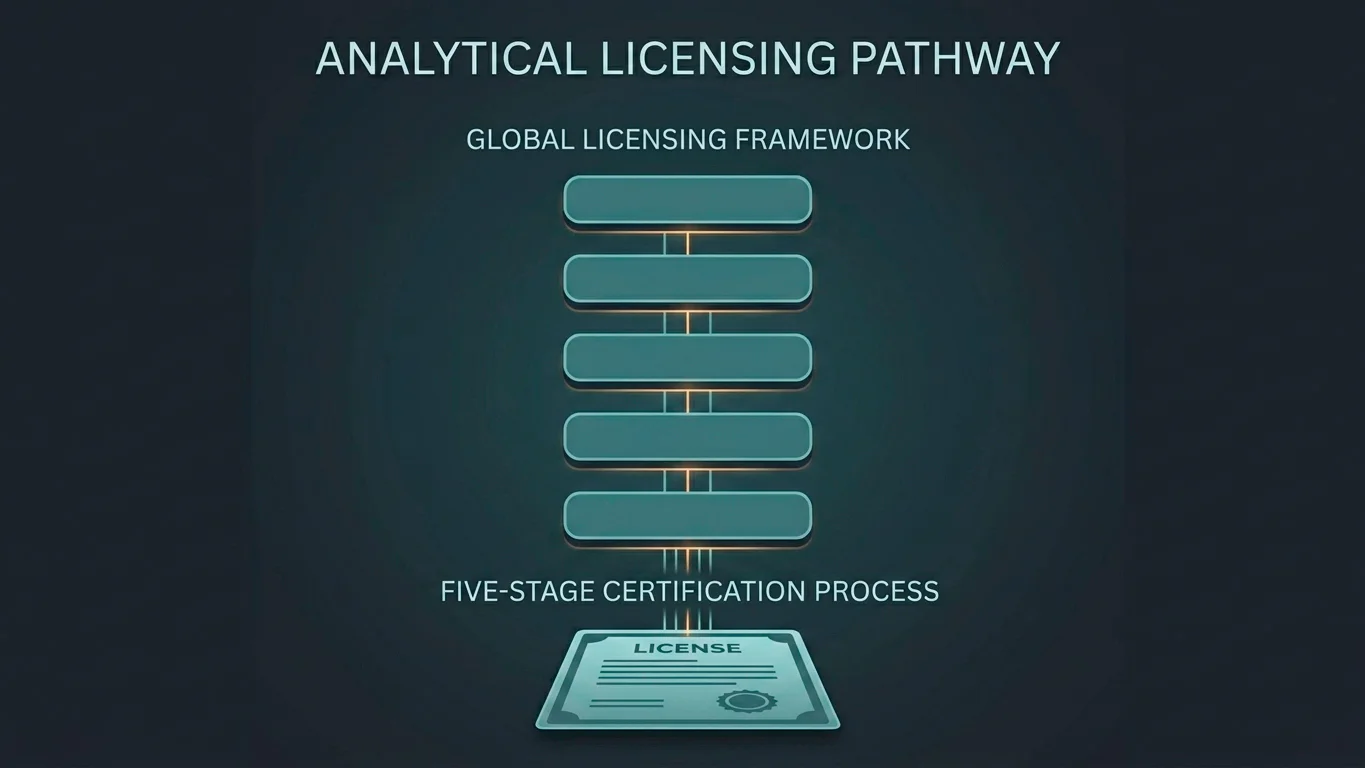
The third pattern is the shared-licence ladder. Many non-GamStop brands are operated by groups that run between four and ten brands under a single corporate entity and a single licence. A player who has self-excluded at one brand can be onboarded at the sister brand with the same email and the same payment card, often without friction. The defence is to identify the parent entity before signing up and to apply any self-exclusion at the group level by emailing the parent’s compliance address (which is sometimes shared across the group). Device-level blocking software such as Gamban, available free under the TalkBanStop programme, defeats this pattern by blocking the parent’s domains at the device layer rather than relying on the operator to honour the exclusion.
Expired-licence operation under a stale footer logo
The fourth pattern emerged during the Curacao LOK transition between late 2024 and mid-2025. Several sites continued to display legacy 1668/JAZ sub-licence logos in their footers after the licence in question had either expired or been superseded by the new OGL/2024/#### regime. Independent review databases flagged these stale footers explicitly. The defence is to verify the licence number on the regulator’s portal rather than to take the footer logo as proof: a current LOK licence will appear on the CGA register with status Active. A licence string that does not appear on the register, or that appears with status Lapsed or with a date in the past, is no longer authority for the site to operate.
Phishing clones imitating legitimate non-GamStop brands
The fifth pattern is the phishing clone. A scammer registers a domain that closely resembles the name of a legitimate offshore brand, builds a near-identical front page, and harvests deposits and card details from players who arrive via a misclicked search advert. The defence is to navigate to the brand from its own published canonical domain (the one listed on the licence register, not the one in an ad), to confirm the SSL certificate’s organisational details, and to be suspicious of any site whose welcome bonus is dramatically more generous than the legitimate brand’s published offer.
Document the verification before you deposit

The cheapest insurance a British player can buy at an offshore site costs nothing and takes about five minutes. Before depositing, screenshot the operator’s footer showing the licence number, the regulator’s register entry showing the licence as active, the bonus terms page in full, and the responsible-gambling and KYC pages. If a dispute arises later, the operator may change its published terms; without your screenshots there is no neutral evidence of what the terms were at the moment you accepted them. Independent dispute platforms such as casino.guru and AskGamblers explicitly request this documentation when a complaint is opened, and the absence of it materially reduces the chance of recovering funds.
Set aside time to read the withdrawal section of the terms in full, not as a formality. Pay attention to the maximum withdrawal per day or week, the proof-of-funds documentation required for crypto withdrawals over a defined threshold, and the operator’s right to apply a “security review” of any withdrawal at its discretion. Anything that creates a unilateral right to delay or block a payout becomes the operator’s first line of defence when a withdrawal is contested. The delayed-withdrawal trap in the payment chain covers the cash-flow side of these same dynamics.
Know what to do when an offshore withdrawal stalls
If a withdrawal stalls and the operator’s customer support is no longer responsive, the realistic options are narrower than at a UKGC site. The independent dispute resolution body IBAS does not cover offshore operators. The Curacao Gaming Authority states explicitly on its own pages that it does not handle individual complaints against gaming providers. The remaining channels are the operator’s regulator (raising a complaint with the CGA or Anjouan is possible but rarely effective in individual disputes), independent mediation by casino.guru or AskGamblers (which has a modest but non-zero success rate at recovering withheld funds, mainly because operators want to manage their public ratings), and, where the payment was made by card, a chargeback through the issuing bank within the network’s time window. Chargebacks for gambling transactions are difficult: many UK card issuers do not pursue them, and Visa and Mastercard rules limit the grounds on which they can be raised. The realistic answer is that, for a British player at an offshore site, recovery of funds is significantly less likely than at a UKGC operator, and this is itself the strongest argument for caution at the verification stage.
If verification is a stress signal, treat it as one
Spending an hour verifying an offshore licence in order to play sooner than the end of a GamStop period is itself a useful data point. If the urgency to play is overriding the natural caution that a verification step exposes, the National Gambling Helpline run by GamCare is free, 24 hours a day, 7 days a week, on 0808 8020 133, with live chat at gamcare.org.uk. GambleAware funds treatment through the National Gambling Treatment Service. The official self-exclusion route remains gamstop.co.uk.
Make verification the default, not the exception
The single behavioural change that most reduces the risk of an offshore loss is to make verification the default first step at any new site, applied before the first deposit rather than after the first dispute. The procedure does not require legal training. It requires the operator’s footer, the regulator’s register, a parent-entity search and ten minutes of reading the bonus and withdrawal terms. For the underlying licence regimes themselves, licence regimes you are verifying covers the formats and supervisory standards; for the UK legal context that determines who carries which liability, the legal status hub sets out the framework; and for the wider picture of payments, KYC and bank-side controls that follow verification, main hub for casinos not on GamStop ties the layers together.
About the author
Nathan Caldwell is a gambling-regulation researcher who has spent more than a decade analysing how UK self-exclusion schemes, licensing frameworks and offshore operators interact. He writes to help readers weigh the legal and safety trade-offs behind their gambling decisions rather than to promote any single operator. Read the full profile on the about page.
Created by the ”Casino not on Gamstop” editorial team.