Check the legal status of non-GamStop casinos for UK players
 Available in GB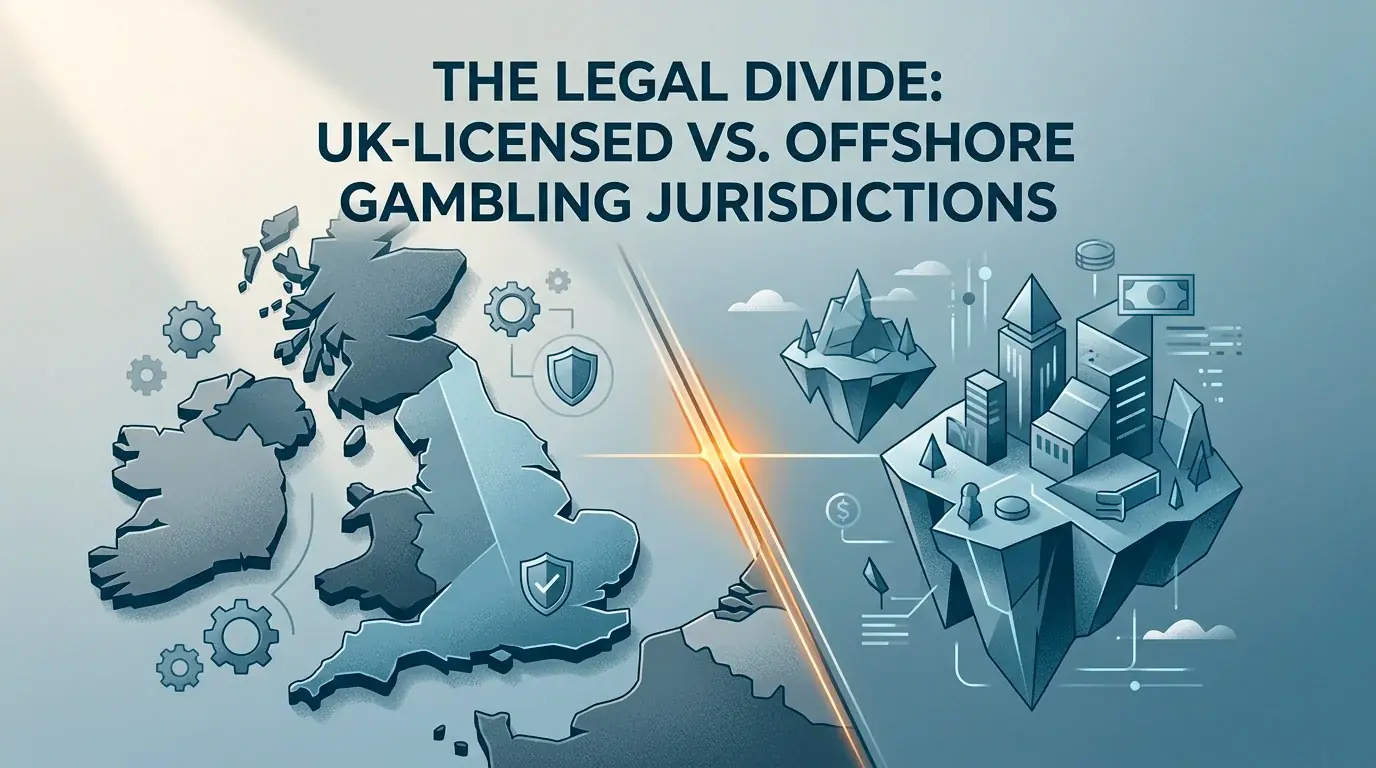
The phrase “casinos not on GamStop” is a marketing label, not a legal category. Whether a British player can lawfully use one, what risks they accept by doing so, and where criminal liability actually sits are three different questions, and answering them properly requires walking through the Gambling Act 2005, the Gambling (Licensing and Advertising) Act 2014 and the Licence Conditions and Codes of Practice that the UK Gambling Commission enforces. This cluster hub sets out the legal picture for British residents who encounter offshore operators, and points to the two supporting pages that go deeper into licence regimes and licence verification.
- Understand the operator-side offence under the Gambling Act 2005
- Recognise what the law does and does not do to the player
- Understand how point-of-consumption regulation reaches offshore brands
- Trace how LCCP 3.5.5 links UK licensing to the GamStop scheme
- Weigh the real-world consequences British players accept offshore
- If gambling has become a concern, use the official UK channels
- Apply a due-diligence checklist before crossing the line
- Take the legal picture into your own decision
- About the author
Understand the operator-side offence under the Gambling Act 2005
British gambling law is, almost without exception, operator-facing. The starting point is section 33 of the Gambling Act 2005, which makes it a criminal offence to provide facilities for gambling in Great Britain without holding a UK Gambling Commission operating licence (or one of the narrow exceptions the Act sets out, such as remote gambling under another regime that is recognised in domestic law). That section is paired with section 36, which sets the territorial scope: section 33 bites on remote gambling where any of the facilities are used in Great Britain. Translated into plain terms, if the operator’s website lets a person in the United Kingdom place a bet or spin a slot, the operator is providing facilities here, and the Act applies to it whether the server sits in Curacao, Anjouan or anywhere else.
The 2007 expansion that closed the obvious loophole came through the Gambling (Licensing and Advertising) Act 2014. Before 2014, an offshore operator could lawfully serve British customers if it held a recognised foreign licence and did not actively advertise into Britain. The 2014 Act introduced “point of consumption” regulation, so any operator transacting with a customer located in Great Britain has to hold a UK Gambling Commission remote licence regardless of where the company is based. From that moment, an offshore casino without a UKGC licence that accepts British customers is in breach of section 33, and the Commission has a statutory toolkit to act against it through enforcement notices, suspensions of UK-facing payment processing and prosecution.

Enforcement is supported by a separate advertising regime. Section 331 of the 2005 Act, together with the Committee of Advertising Practice (CAP) code and the Advertising Standards Authority, makes it unlawful to advertise unlicensed remote gambling into Britain. The Commission has acted under that authority more than once, working with payment providers and search engines to throttle UK-facing promotion of offshore brands. On 23 February 2026 the Department for Culture, Media and Sport launched a consultation on banning sports sponsorship by unlicensed operators, citing section 33 of the Act as the underlying offence the consultation seeks to reinforce.
Recognise what the law does and does not do to the player

The most common question British readers ask in this area is whether they personally commit an offence by gambling at an offshore site. The Gambling Act 2005 does not contain a provision that makes it a criminal offence for an adult resident of Great Britain to place a bet at an unlicensed remote casino. The Act targets the supply of facilities, not the demand for them. A British player who deposits at a Curacao-licensed non-GamStop site is not, by that act alone, breaking domestic gambling law. That position is set out in commentaries by major law firms and confirmed in the structure of the statute itself, which directs offences at operators, intermediaries and advertisers rather than at consumers.
The absence of a player-side offence does not mean that nothing happens to the player. Several consequences attach as a practical matter and they need to be understood before treating offshore play as risk-free. First, every consumer protection that flows from a UK Gambling Commission licence vanishes. There is no compulsory connection to an alternative dispute resolution body such as IBAS, so a player who falls out with an offshore operator over a withheld withdrawal has no UK forum to escalate to. Second, the affordability and responsible-gambling controls that UKGC operators must apply, including stake limits and the slot limits of GBP 5 per spin for players aged 25 and over and GBP 2 per spin for players aged 18 to 24, are not enforced offshore at all. Third, the deposits a player makes are not necessarily held in segregated accounts to the standards the UKGC defines, so if the operator becomes insolvent the funds may simply be lost.
There is also a financial-services layer that British players often discover only after the fact. UK banks are not gambling regulators, but they are anti-money-laundering regulated entities under the Money Laundering Regulations 2017. When meaningful sums arrive in a UK current account from an offshore gambling source, the bank is obliged to ask source-of-funds questions. Players have lost current accounts, not because gambling at the offshore site was unlawful, but because they could not satisfy the bank’s anti-money-laundering enquiry to the standard the regulations require. The legal status of offshore play and its real-world cost to a player are therefore two different things, and any honest assessment has to acknowledge both.
Understand how point-of-consumption regulation reaches offshore brands
The 2014 Act is the most consequential piece of legislation for this niche after the original 2005 statute. Before its commencement, an offshore operator could realistically argue that it owed nothing to the UK regulator because it held a Gibraltar, Alderney or Malta licence and did its business under that supervisory regime. Point-of-consumption regulation flipped that. The Commission now treats the location of the customer at the moment of the bet as the determining factor, and it enforces that view through licence conditions, advertising codes and inter-agency cooperation with payment networks and search engines.
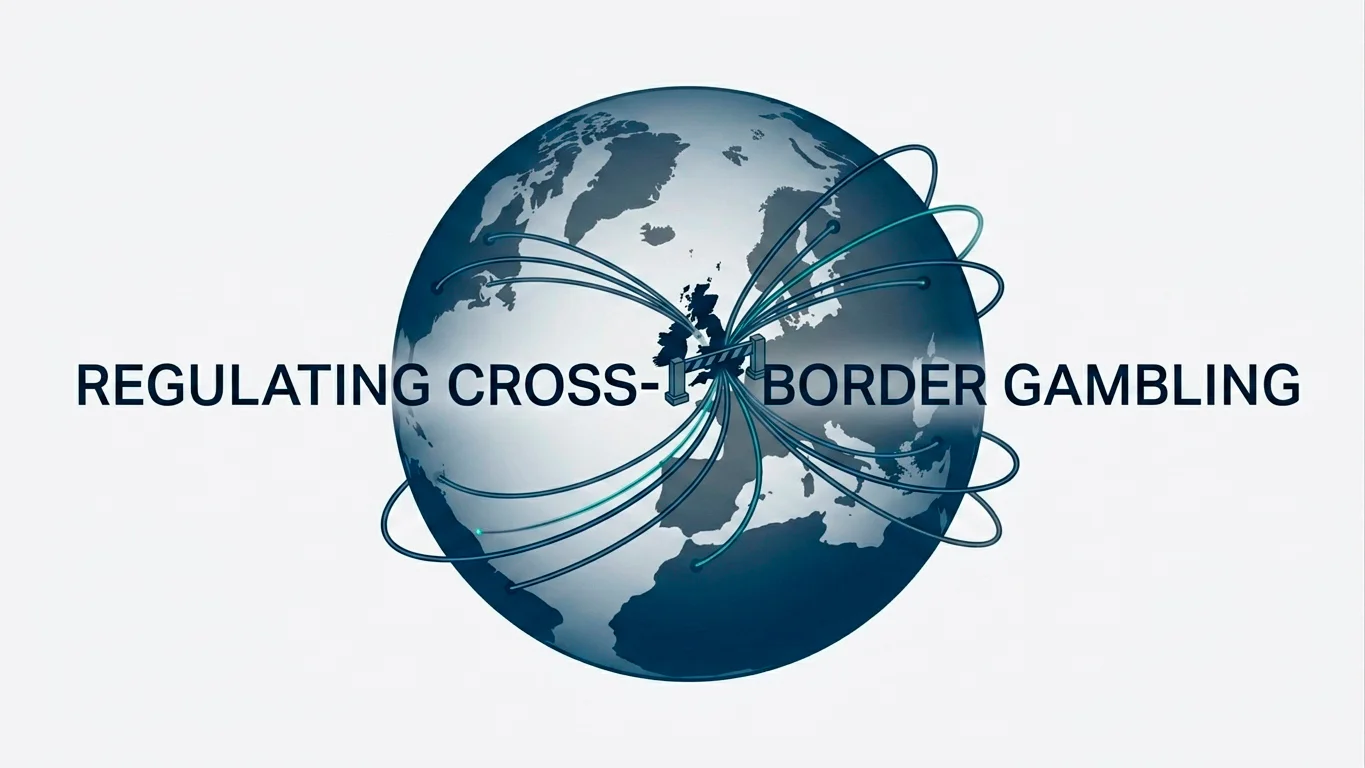
Three practical consequences follow. First, an operator that wants to serve declared British residents has to apply for a UKGC remote licence and accept the Licence Conditions and Codes of Practice in full. Once it does that, it is also obliged to integrate with the GamStop self-exclusion scheme under social-responsibility code 3.5.5, which is the very obligation that makes “casinos not on GamStop” a coherent label in the first place: if you find a casino that does not check the GamStop database, you are looking at an operator that is not authorised by the UKGC. Second, operators that wish to remain offshore have a narrow set of choices: they can decline to accept declared British residents (some do, by IP-blocking and by rejecting British identity documents at KYC), or they can accept them and run the regulatory risk. Third, hybrid groups have appeared, with one entity holding a UKGC licence for the British-facing brand and another entity holding a Curacao or Anjouan licence for a non-UK-facing sister brand. The legal lines between these can be blurred in marketing, but they are not blurred in the underlying licences. To go deeper into the offshore side of this divide, our companion page on Curacao, Anjouan and MGA licences compared walks through what each regime actually requires.
Trace how LCCP 3.5.5 links UK licensing to the GamStop scheme
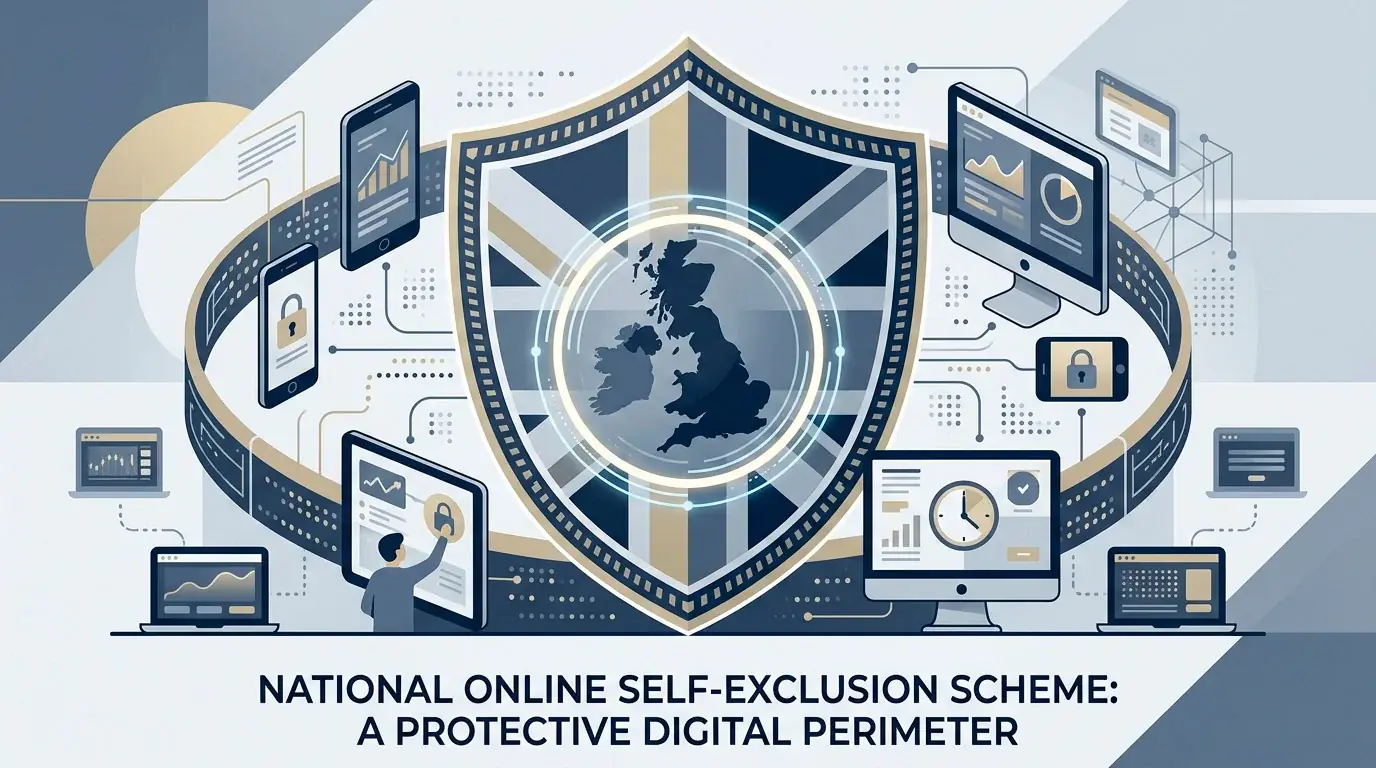
The technical bridge between the licensing regime and the self-exclusion scheme is a single line of regulatory text: social-responsibility code 3.5.5 in the UK Gambling Commission’s Licence Conditions and Codes of Practice. Since 31 March 2020 every UKGC online operator has been required to participate in GamStop, and since 1 April 2024 the requirement has extended to telephone and email betting as well. The Commission documents that obligation on its own pages, and it sits alongside section 33 of the 2005 Act as one of the two pillars that define the difference between a UKGC casino and an offshore casino as a regulatory matter rather than as a marketing choice.
The reverse implication matters too. Because LCCP 3.5.5 is a licence condition, an offshore casino that does not hold a UKGC licence is not bound by it. There is no obligation on a Curacao-licensed operator to query GamStop at registration, no obligation to refresh the GamStop list every 24 hours, and no obligation to share self-exclusion data with British counterparts. That is the legal reality behind the marketing claim that an offshore casino “is not on GamStop”. It is not a feature the operator built in; it is the inevitable consequence of holding a non-UK licence. If you want the scheme itself unpacked end to end, including the recent extension to telephone and email channels, the GamStop scheme that sits behind LCCP 3.5.5 covers it on the dedicated cluster page.
Weigh the real-world consequences British players accept offshore
A neutral assessment has to set out what is gained and what is lost when a British resident plays offshore, and to do so without the affiliate gloss that dominates the search results for this term. On the gained side, players cite higher stake ceilings (the UKGC slot caps of GBP 5 and GBP 2 per spin do not apply), looser affordability checks, more flexible bonus structures and payment options that the UKGC has either prohibited (credit cards, banned at all UKGC-licensed sites since April 2020) or that the British banking system has restricted (most cryptocurrency on-ramps). On the lost side are the consumer protections discussed earlier, but also several less obvious items that deserve naming in full.
One of the less obvious losses is recourse against operator misconduct. Independent complaint databases such as casino.guru and AskGamblers record recurring patterns at offshore brands that British players seldom encounter at UKGC sites: late KYC requested only when a withdrawal is initiated, followed by account closure citing a terms breach; retroactive “bonus abuse” findings that confiscate balances; and the shared-licence ladder where a single parent company runs several brands under one licence string, so a self-exclusion at one brand does not affect the sister brands. Our companion page on how to verify a non-GamStop licence and spot scam patterns catalogues these recurring patterns in detail, with first-party links to the UKGC public register and to the Curacao Gaming Authority verification portal.
Another less obvious loss is informational. A UKGC-licensed operator has to publish licence numbers, ADR membership, problem-gambling support links and bonus terms in standardised formats the Commission audits. An offshore operator publishes whatever its marketing team and its licensing authority require, which is much less. A player who wants to do their own due diligence at an offshore brand has to learn the format of a Curacao Online Gaming Licence number, the format of an Anjouan ALSI licence and the methods independent reviewers use to confirm that a licence is actually live rather than expired. None of this is impossible, but none of it is supplied by default the way it is supplied at a UKGC site.
If gambling has become a concern, use the official UK channels
If you are reading this because GamStop’s coverage feels like a problem rather than a protection, that is itself a signal worth listening to. The National Gambling Helpline, operated by GamCare, is free and available 24 hours a day, 7 days a week on 0808 8020 133, with live chat at gamcare.org.uk. GambleAware funds treatment through the National Gambling Treatment Service and the NHS Gambling Clinics. The self-exclusion scheme itself is at gamstop.co.uk, and the joint programme TalkBanStop combines GamCare’s helpline, GamStop registration and a free Gamban device-level block; the practical detail of that programme is on the dedicated page about the the GamStop scheme that sits behind LCCP 3.5.5.
Apply a due-diligence checklist before crossing the line
Readers who, having weighed the above, decide to engage with an offshore site should at least apply a basic due-diligence checklist that protects them from the more avoidable failure modes. The checklist is short and is the same one we recommend on the verification page, but it is worth restating here because it changes the experience materially. First, locate the licence number in the operator’s footer and confirm it on the licensing authority’s own register: a Curacao licence under the LOK regime takes the form OGL/2024/####/#### and is searchable on the CGA portal; an Anjouan licence takes the form ALSI-####-#### and is verifiable through Anjouan Gaming. Second, look for the operator’s corporate entity: many non-GamStop brands share a single corporate parent and a single licence with five or more sister brands, so excluding from one brand does nothing at the others. Third, read the withdrawal section of the terms and the KYC section together: the most common offshore failure mode is a delayed identity check that only triggers at withdrawal.
To go deeper into any of these steps the cluster supports a dedicated page on each. The licence regimes themselves are unpacked at offshore licence regimes after the 2024 LOK reform; the verification procedures and the scam patterns are at spot scam patterns in this niche; the GamStop framework that creates the boundary in the first place is at how GamStop actually works. Returning to the casinos not on GamStop overview ties the legal layer back into the wider picture of payments, KYC and bank-side controls.

Take the legal picture into your own decision
The most honest summary of the legal position is that British players who play offshore are not committing a criminal offence, but they are stepping outside the entire structure of consumer protection that the Gambling Act 2005 and the UK Gambling Commission were built to provide. The operator commits the offence if it serves a British customer without a UKGC licence; the player accepts the consequences of having no UK regulator to escalate to. Whether that trade is acceptable is a decision only the individual reader can make, and it should be made with knowledge of the licence regimes, the verification methods and the practical risks rather than from a ranked list of brand names. The remainder of this cluster is built to supply that knowledge.
About the author
Nathan Caldwell is a gambling-regulation researcher who has spent more than a decade analysing how UK self-exclusion schemes, licensing frameworks and offshore operators interact. His work centres on player-protection mechanisms, the GamStop scheme and the practical realities British players face when they encounter operators licensed outside the United Kingdom. He writes to help readers weigh the legal and safety trade-offs behind their gambling decisions rather than to promote any single operator. Over his career he has contributed analysis to industry compliance discussions and completed certified training in responsible-gambling practice. Read the full profile on the about page.
Prepared by the Casino not on Gamstop editorial staff.