Understand KYC and identity verification at non-GamStop sites
 Available in GB
“No KYC casino” is one of the most-used marketing phrases in the non-GamStop niche, and one of the most misleading. The honest version of the claim is that the operator defers identity verification rather than skipping it. KYC almost always arrives, but it arrives at the worst possible moment for the consumer: when the consumer is trying to withdraw. This page sets out what KYC actually means in the offshore context, how the Curacao Landsverordening op de Kansspelen reform of December 2024 and the Anjouan ALSI framework treat verification, where the UK-side anti-money-laundering rules sit in the picture, and how the “delayed KYC trap” plays out in real complaint patterns.
- Understand what KYC really is and why it exists
- Compare KYC under Curacao LOK and Anjouan ALSI
- Check how UK AML rules still apply to British players
- Recognise the delayed KYC withdrawal trap
- Check the documents typically requested at withdrawal
- Understand why withdrawal-time KYC is a red flag, not a feature
- Get help with gambling harm in the United Kingdom
- About the author
Understand what KYC really is and why it exists
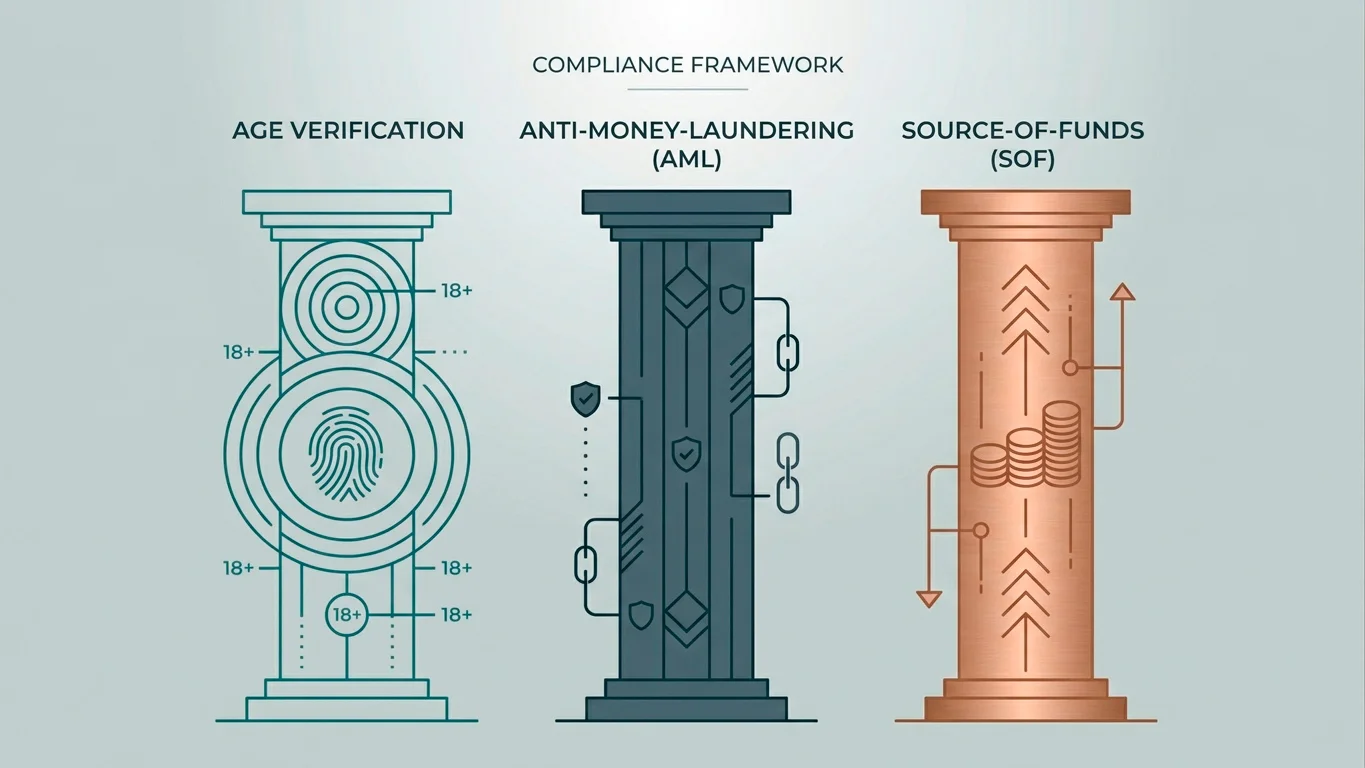
KYC, short for “Know Your Customer”, is the documented process by which a regulated business verifies the identity of the person it is doing business with. In gambling, KYC has three connected purposes: confirming that the customer is of legal age, confirming that the customer is who they claim to be for anti-money-laundering reasons, and confirming that the source of the funds being deposited is legitimate. Different licensing regimes treat each of the three purposes with different weight, and the order in which the operator runs them is the most consequential operational choice the operator makes.
The UK Gambling Commission’s standard is the strictest of the three regimes most often compared in this niche. UKGC operators must complete identity verification before allowing a deposit or any meaningful play, and they must escalate to source-of-funds verification when transactions cross thresholds set in the regulator’s published guidance. The standard is documented in the regulator’s guidance pages at gamblingcommission.gov.uk, and the underlying legal basis is in the Gambling Act 2005 read together with the Money Laundering Regulations 2017. The defining property of UKGC KYC is that it is front-loaded: the operator pays the friction cost at registration rather than at withdrawal, which means the consumer also pays the friction cost at registration but does not encounter it again when winning.
Compare KYC under Curacao LOK and Anjouan ALSI
The Curacao licensing regime changed substantially on 24 December 2024 when the Landsverordening op de Kansspelen entered into force. Under the new ordinance, supervised by the Curacao Gaming Authority, operators are required to apply customer due diligence including identity verification, but the law is less prescriptive than the UKGC standard about the timing of that verification. In practice this is interpreted by most LOK-licensed operators as risk-based verification: low-deposit, low-volume accounts may play for some time before KYC is triggered, while higher-volume accounts and withdrawal attempts of any size trigger immediate verification. The published statutory text confirms that adequate customer due diligence is required; it does not impose the UKGC-style front-loaded model.
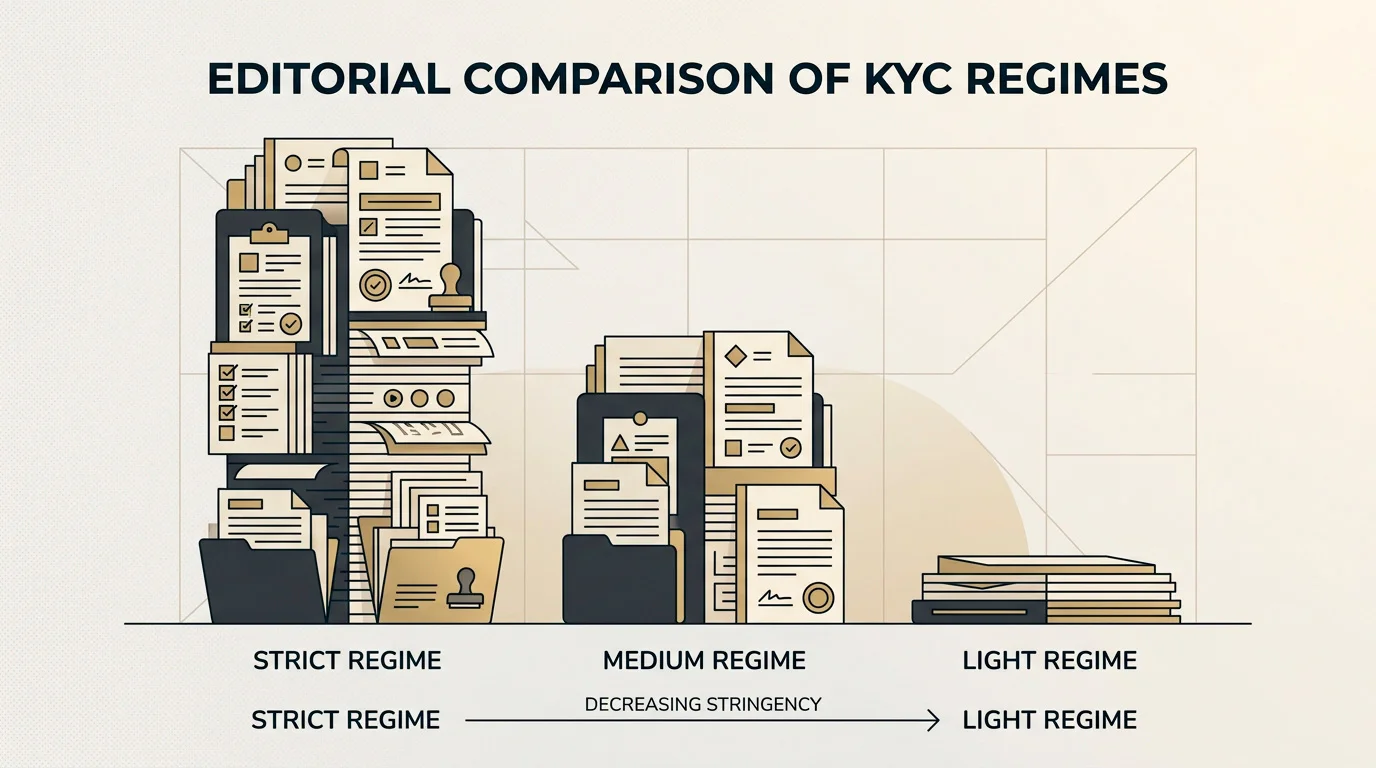
The Anjouan framework, administered by Anjouan Gaming under the Union of Comoros, applies a lighter touch. Operators are expected to have a customer-due-diligence policy but the supervisory infrastructure is less mature than either the new Curacao authority or the UKGC. The practical effect is that Anjouan-licensed sites can advertise “no KYC at registration” with a straight face under their own licensing standard, even though the same operators almost always demand documents at the withdrawal stage because their payment processors require it. The Maltese MGA standard, the third regime often listed alongside these two, is the closest to UKGC in rigour; MGA operators that accept British customers usually also hold a UKGC licence, which makes “MGA-only non-GamStop” a rare combination for a British player.
Check how UK AML rules still apply to British players
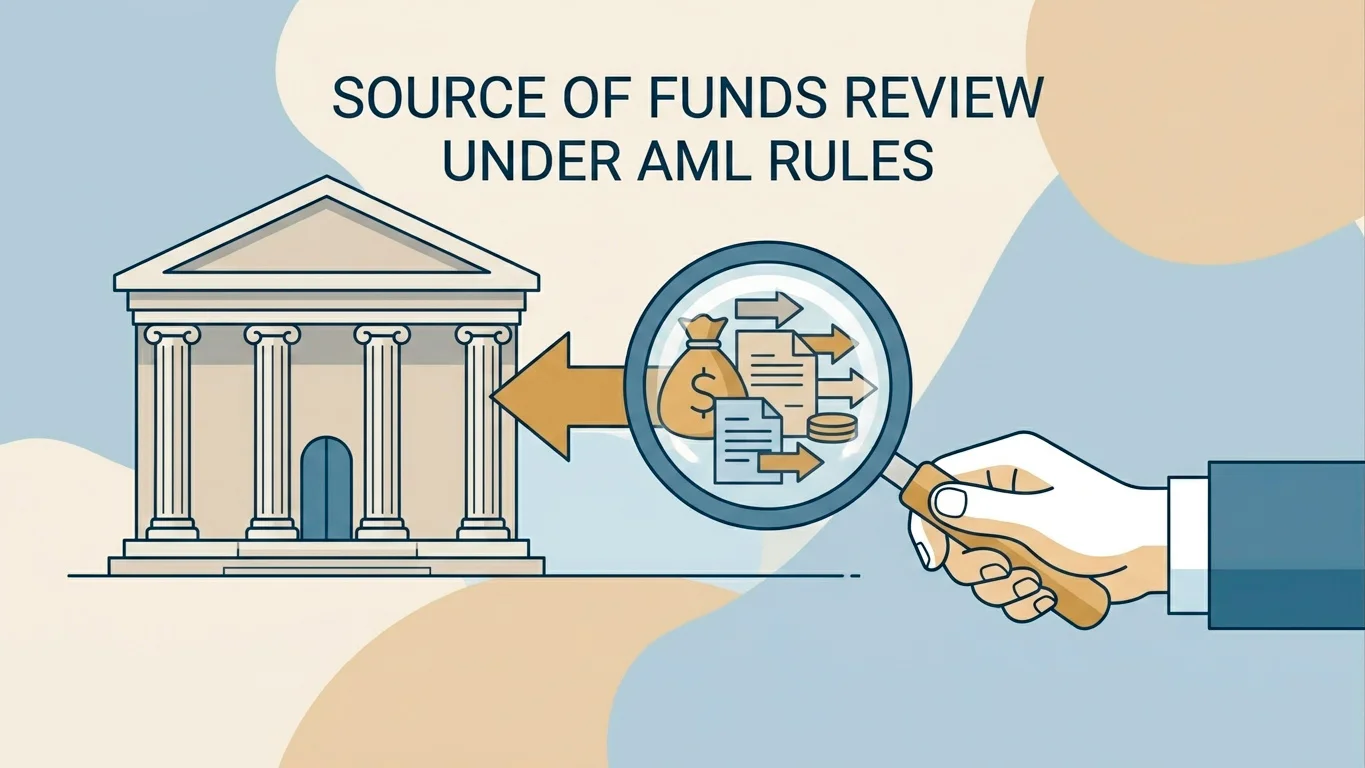
The crucial point that “no KYC” marketing leaves out is that anti-money-laundering rules do not stop at the operator’s licence. The British player’s own bank, e-wallet provider and crypto exchange are all regulated UK or UK-facing financial institutions, and they are bound by the Money Laundering, Terrorist Financing and Transfer of Funds (Information on the Payer) Regulations 2017. Those regulations require regulated firms to apply customer due diligence, monitor transactions and ask for source-of-funds evidence when a customer’s activity is inconsistent with their known profile. The relevant trigger is not the operator’s licence; it is the bank’s view of the transaction.
The result is that even if an offshore operator never asks a British player for identity documents, the player’s UK bank or e-wallet may do so when winnings arrive, and the crypto exchange used to convert coins back to sterling will almost certainly do so. The Financial Conduct Authority’s guidance on cryptoasset firms requires registered exchanges to operate KYC and AML procedures equivalent to those at regulated banks, and an inbound conversion that is significantly larger than the customer’s normal pattern routinely triggers an enhanced due diligence review. The “no KYC casino” claim is therefore a partial truth: the operator may genuinely skip KYC at the front door, but the financial pipeline the consumer uses to fund the account and cash out the winnings is regulated under UK law and applies its own checks.
Three of these documents are routine and the consumer should be ready to supply them on first request.
Recognise the delayed KYC withdrawal trap
The single most common complaint pattern across independent review platforms in this niche is the “delayed KYC trap”. The pattern works like this. The operator accepts the consumer’s registration without verification, accepts deposits without verification, and lets the consumer play and win. When the consumer requests a withdrawal, the operator’s KYC process begins, often for the first time. The verification request typically asks for a government-issued identity document, a proof of address dated within the last three months, a selfie or video verification, source-of-funds evidence for the deposits, and in some cases ownership evidence for the payment method used for deposit. The consumer either supplies the documents and waits for an extended review, or fails one of the checks and finds the account suspended with the balance held.
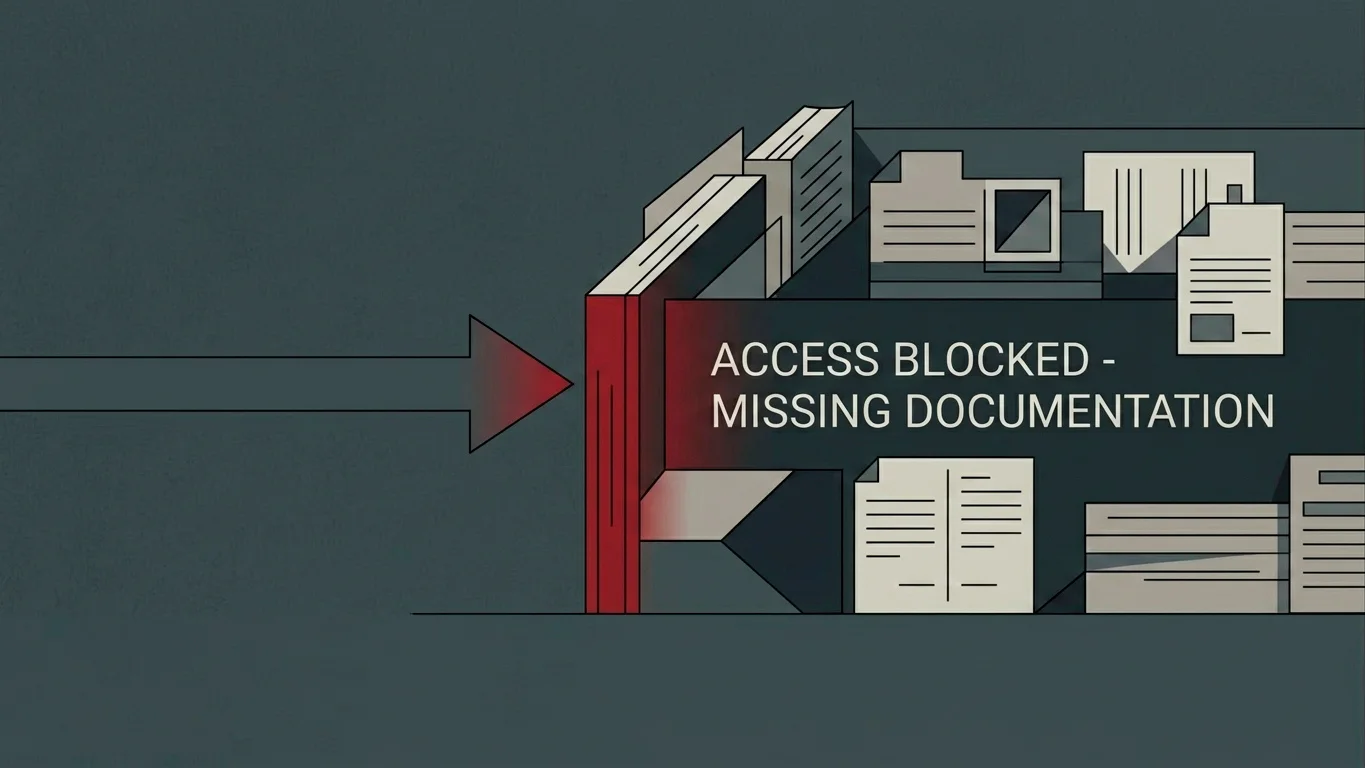
What turns the standard deferred KYC into a trap is the asymmetry of incentive. The operator has no commercial cost in extending the review for weeks; the consumer has every commercial cost in the world. A meaningful subset of operators uses the moment of withdrawal to apply a retrospective terms-of-service reading, citing “bonus abuse”, “duplicate accounts” or “country restrictions” as grounds for confiscating the balance after the KYC check. Independent review platforms such as casino.guru and askgamblers have documented hundreds of complaints fitting this pattern. The verification step itself is rarely the problem; the problem is that it arrives only when leverage has flipped entirely to the operator’s side.
For wider context on how this pattern interacts with payment routes and licensing, the relevant pages are the payment methods that trigger KYC page and the wider legal context on the Legal and licensing hub. The same scam taxonomy is set out on the licence-verification page that lists shared-licence sister brands and expired-licence operations alongside delayed KYC.
Check the documents typically requested at withdrawal
The standard offshore withdrawal-stage KYC packet is broadly consistent across operators because the underlying payment processors require similar evidence. The first document is a government-issued photo identification, normally a passport or driving licence. The second is a proof of address, normally a utility bill or bank statement dated within the last three months. The third is some form of liveness check, either a selfie holding the identity document or a short video sequence. The fourth is a source-of-funds confirmation, typically a bank statement showing the deposits leaving the consumer’s account and arriving at the operator or at an intermediary e-wallet. The fifth, applied only sometimes, is evidence of payment-method ownership: a screenshot of the e-wallet account or a card image with the card-number middle masked.
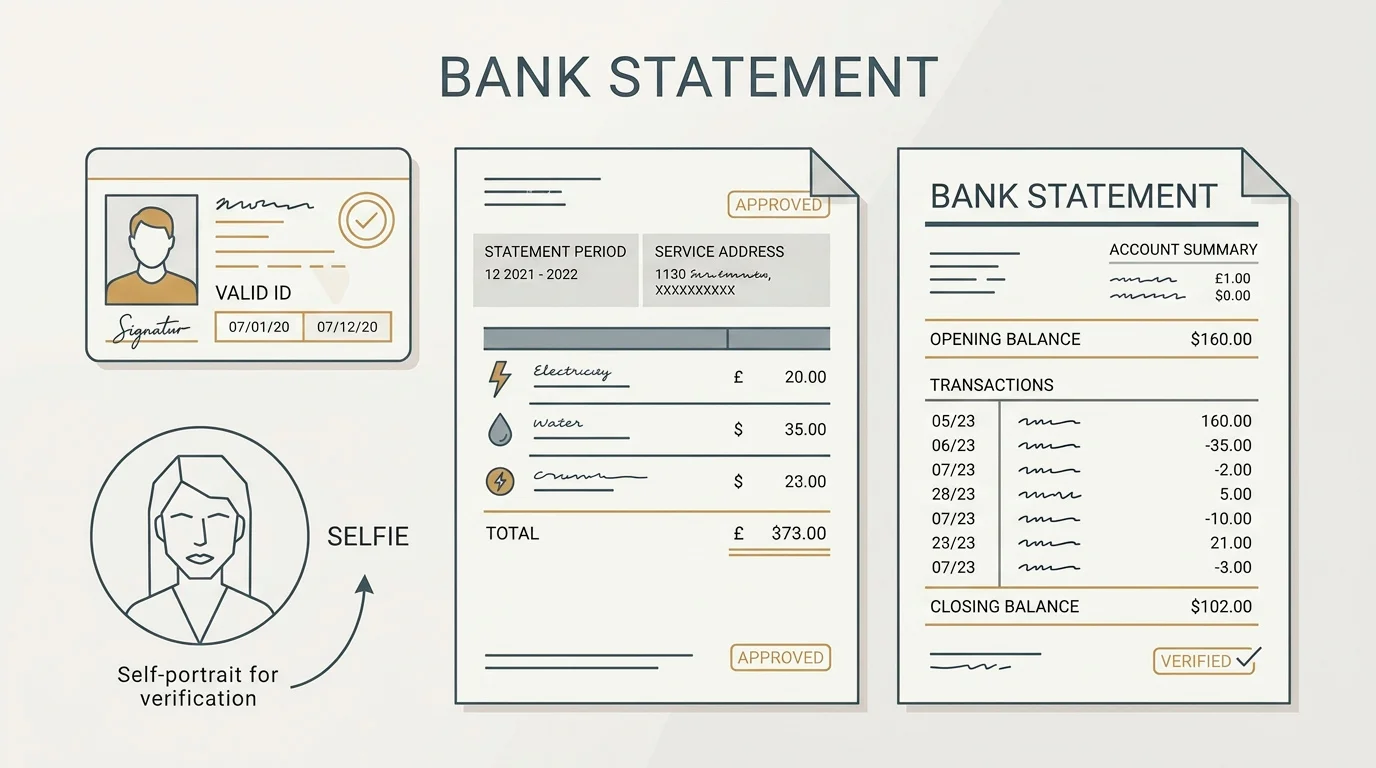
Three of these documents are routine and the consumer should be ready to supply them on first request. Two of them are not routine and tend to be where complications arise. The source-of-funds evidence is fact-dependent and a self-employed consumer or a consumer whose finances do not look “neat” can take weeks to assemble. The payment-method-ownership evidence is intrusive and many consumers refuse, at which point the operator can apply its terms of service to suspend the account. Neither of these checks is illegitimate, but the absence of any front-end verification means the consumer encounters them at the worst possible time. The bank-side equivalent, where the UK bank may require source-of-funds evidence for the inbound conversion of crypto winnings, is covered on the UK bank source-of-funds queries page.
Understand why withdrawal-time KYC is a red flag, not a feature
Marketing copy presents “no KYC at registration” as a convenience. A more accurate reading is that the timing of KYC is a signal about how the operator treats the consumer. UKGC operators front-load KYC because the regulator requires it, but the side effect is that the consumer’s identity and source-of-funds status are settled before any winnings arise. The operator cannot use a withdrawal as the trigger for a documents review because all of that has already happened. Offshore operators that defer KYC to the withdrawal stage retain the option, by design, of conducting an aggressive review at the most expensive moment for the consumer. The single most reliable predictor of whether a complaint will end well is whether KYC happened up-front or at the cash-out.
For a British player approaching the non-GamStop niche, this is the most useful single takeaway. “No KYC” is rarely a selling point; it is almost always a deferral. The consumer who minds the wait at registration is the same consumer who minds, more, the wait at the withdrawal. The choice is between paying the friction cost when nothing is at stake and paying it when winnings are. The wider context on how the offshore market works, including operator-side and player-side legal positions, is on the main non-GamStop guide.
Get help with gambling harm in the United Kingdom
The National Gambling Helpline, operated by GamCare, is on 0808 8020 133, free from any UK landline or mobile, 24 hours a day, 7 days a week, with live chat at gamcare.org.uk. gambleaware.org publishes treatment information. gamstop.co.uk is the national self-exclusion scheme.
About the author
Nathan Caldwell is a gambling-regulation researcher who has spent more than a decade analysing how UK self-exclusion schemes, licensing frameworks and offshore operators interact. His work centres on player-protection mechanisms, the GamStop scheme and the practical realities British players face when they encounter operators licensed outside the United Kingdom. He writes to help readers weigh the legal and safety trade-offs behind their gambling decisions rather than to promote any single operator. Read more about Nathan on the author profile.
Written by the editors at Casino not on Gamstop.