
End your GamStop self-exclusion the legitimate way
 Available in GB
Search results for “remove GamStop” are full of paid services that promise to lift an active self-exclusion early. Every one of them is, at best, a misrepresentation and, at worst, an outright scam. The scheme is built on a deliberate design choice: once a consumer has chosen an exclusion length, that length runs to its end date and cannot be shortened from inside the system. There is exactly one lawful route off GamStop, and it works only at the natural end of the term. This page sets out that route in detail, explains the official 24 hour cooling-off period, covers the auto-renewal opt-out introduced in December 2024, and addresses the search behaviour that pushes people toward unsafe alternatives.
- Understand why mid-period removal does not exist
- Walk through the official end-of-period process
- Check the five-year auto-renewal option introduced in December 2024
- Understand what happens to your data after the exclusion ends
- Understand why people search for early removal and what to do instead
- Connect the legitimate exit to the wider picture
- Get help with gambling harm in the United Kingdom
- About the author
Understand why mid-period removal does not exist
The most important point on this page is also the one that is hardest for some consumers to hear: there is no mid-period removal mechanism for GamStop. A six-month exclusion runs for six months, a one-year exclusion runs for a year, and a five-year exclusion runs for five years. The scheme operator, NOSES, does not have a process to shorten an active term, the UK Gambling Commission has not granted any third party permission to do so, and no licensed operator is allowed to override the database lookup. This is not a technical limitation that a clever workaround can solve; it is a deliberate harm-reduction feature, modelled on the standard “cooling-off” principle used across consumer-protection regulation, and it exists precisely because the moment a self-excluded consumer most wants to undo the exclusion is rarely the moment when undoing it would be in their interest.
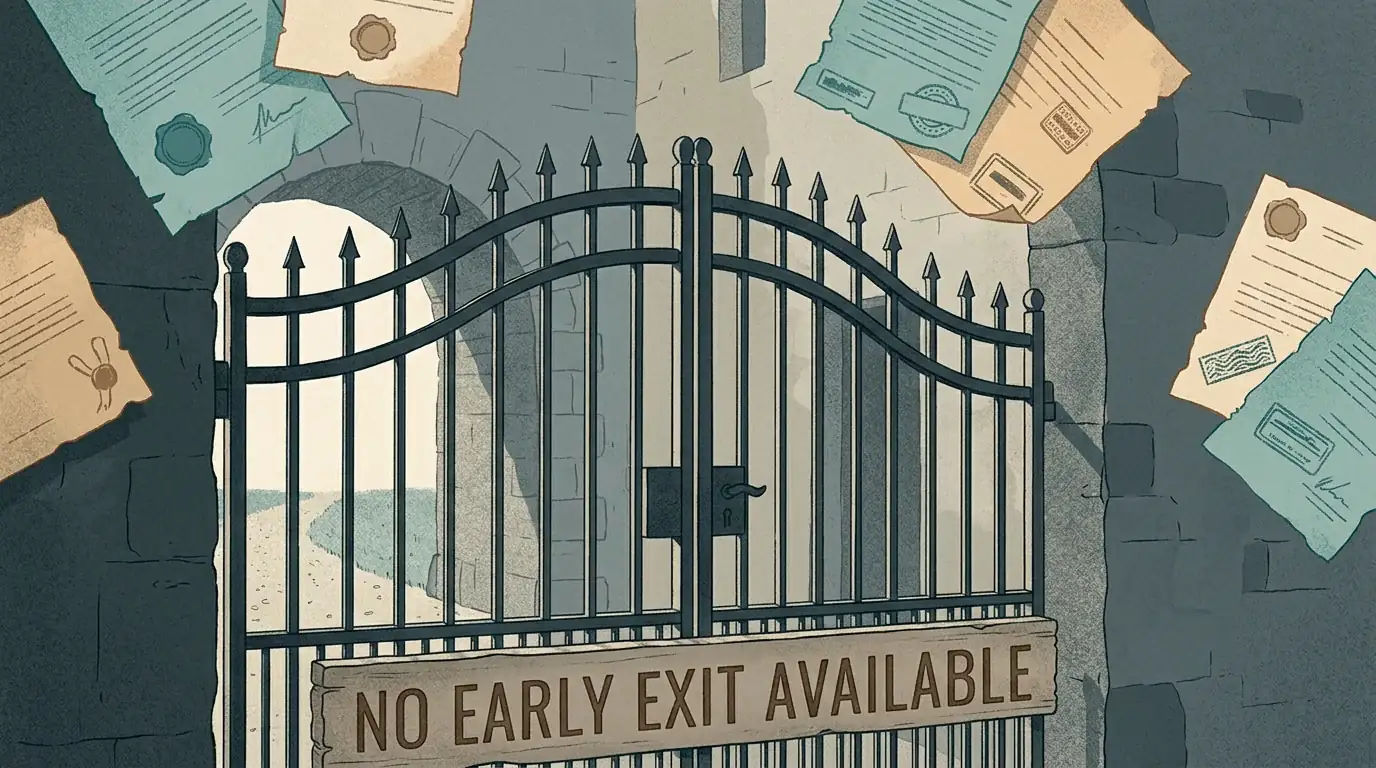
That design choice has a practical consequence: any service that claims it can take your money in exchange for shortening an active GamStop term is selling something it cannot deliver. Some such services are simple advance-fee frauds that disappear once the payment is taken. Others are more elaborate and supply the registrant with talking points to use against UK operators, which do not work because the operator queries the GamStop database directly rather than relying on the customer’s account history. A small number front-run an inevitable expiry: they take a fee from a consumer whose term is about to end anyway and then claim credit when the natural expiry arrives. None of these patterns is the same as actually removing an active exclusion, and the regulator has been clear in its consumer guidance that no such removal is possible.
Walk through the official end-of-period process
The lawful route off GamStop only opens when the chosen term reaches its end date. At that point the registrant must take an active step. The end of the term does not, by itself, reopen access to UK-licensed sites. Instead, the consumer logs back in to gamstop.co.uk and confirms that they wish to come off the register. The scheme then triggers a 24 hour cooling-off period before the change becomes effective. During the cooling-off window the consumer can cancel the request and continue to be excluded; only if the request is left to run for the full twenty-four hours does the database flag change to “not excluded” and the daily operator sync removes the consumer from the block list.

The cooling-off design is intentional. The scheme operator’s own user research has consistently found that consumers who request a same-day reopen are significantly more likely to relapse than those who pause for at least a day, and the twenty-four-hour gap is the minimum that produced a measurable reduction in immediate sign-ups. The scheme’s underlying obligation traces back to Social Responsibility Code 3.5.5 of the UK Gambling Commission’s LCCP, which sets out how self-exclusion must be handled by every UK-licensed online operator and which explicitly references a cooling-off process at the end of the term.
One detail to note is that the cooling-off period is the only legitimate use of the word “removal” in this context. It does not shorten the exclusion; it only governs the transition out of an exclusion whose natural end has been reached. If a consumer does nothing at the end of the term, they remain on the register indefinitely until they actively initiate the cooling-off process. The default after expiry is therefore “still excluded”, not “automatically reopened”.
Check the five-year auto-renewal option introduced in December 2024
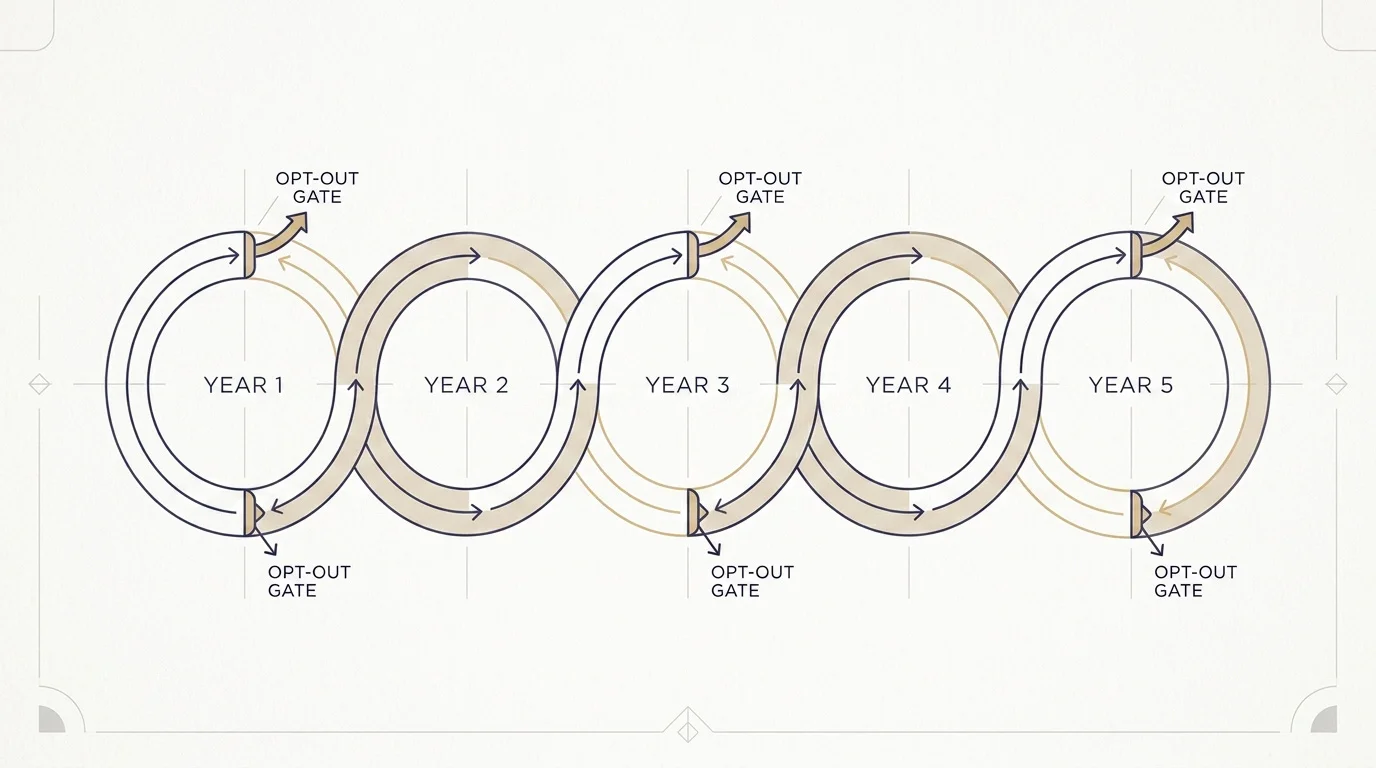
From December 2024 the five-year exclusion length has had an “auto-renewal” variant. A consumer who selects five years with auto-renewal continues to be excluded indefinitely until they actively opt out at the end of a five-year cycle. The opt-out is handled in the same way as any other end-of-period request, using the 24 hour cooling-off window. The reason NOSES introduced the variant is that earlier scheme data showed a clustering of new registrations within a few months of original five-year expirations, suggesting that for the most vulnerable cohort the natural end of the term was acting as a re-entry point into harmful gambling rather than as a recovery milestone.
For consumers who chose five years before December 2024, the default remains “expire at the end of the term”. For those who select five years with auto-renewal afterwards, the default is “stay excluded”. The two cohorts are flagged differently inside the database, and a consumer who is unsure which one they belong to can check by logging in and looking at the period settings on their own GamStop profile.
Understand what happens to your data after the exclusion ends
NOSES is the data controller for the GamStop register and processes personal data under the UK General Data Protection Regulation and the Data Protection Act 2018. Even after a consumer has come off the active block list, the scheme retains a record of the registration to support reporting, statistical analysis and any future re-registration. Under UK GDPR a consumer has the right to request access to the data held about them, to ask for corrections to inaccurate records and, in some circumstances, to ask for erasure. The full retention schedule and the lawful-basis explanation live in the GamStop privacy notice on the scheme operator’s own site.
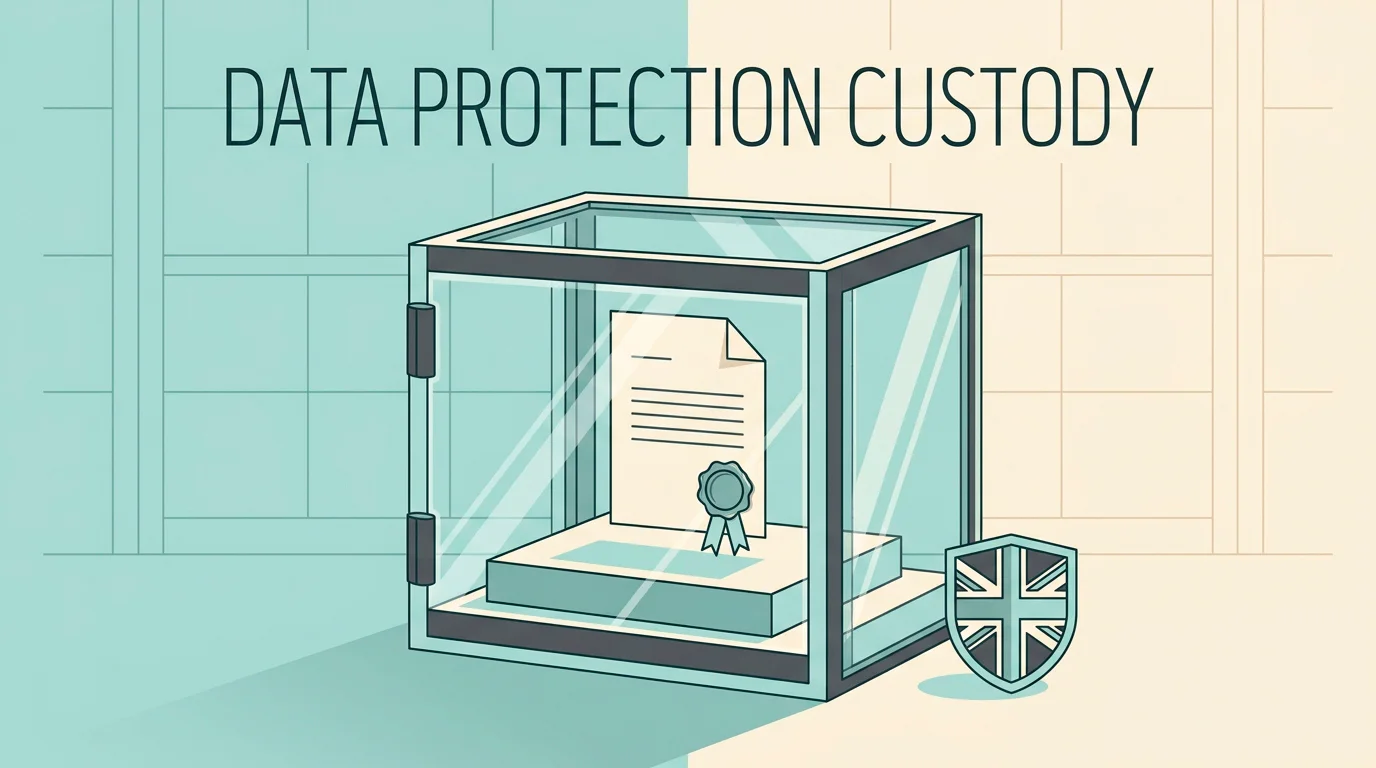
The retention point matters because it interacts with the operator side of the system. If a consumer comes off the register today and later signs up again, the daily sync at every UK operator picks up the new registration within twenty-four hours and re-applies the block. The scheme is therefore not a one-shot tool: a consumer can use it repeatedly, and the underlying record helps the scheme detect patterns of churn that would otherwise be invisible. The data-retention design and the cooling-off design are connected; the first allows the scheme to learn from individual histories, and the second slows down the most relapse-prone transitions out of exclusion.
Understand why people search for early removal and what to do instead
People search for “remove GamStop” or “cancel GamStop” for a small number of repeating reasons. Some registered on impulse during a difficult moment and want to undo a decision that, with hindsight, they consider an overreaction. Others took a longer exclusion than they now feel comfortable with and want to renegotiate the length. A smaller but more concerning group is actively seeking to gamble despite an active term, often because a particular event such as a major sporting fixture is approaching. The first two reasons are understandable and the search is rational; the third is the warning sign that the harm-reduction architecture was designed to address.
For all three groups the practical response is the same. Mid-period removal is not on the menu, and offshore sites are not a safe alternative either, for the reasons covered on the GamStop scheme explained page and on the main hub. The constructive routes are the ones that strengthen the existing exclusion rather than try to circumvent it: the National Gambling Helpline, free on 0808 8020 133 and operated 24 hours a day, 7 days a week, by GamCare, gives access to brief intervention and onward referral; the NHS National Gambling Treatment Service offers structured clinical help; and the alternative blocking tools ecosystem layers device-side and bank-side blocks on top of the database side, closing the offshore gap that a GamStop-only set-up leaves open.

If you are reading this page during an active exclusion and the urge to gamble is strong, the most useful thing to do right now is not to engage with the offshore market but to make a phone call. The helpline number is 0808 8020 133, the call is free from any UK landline or mobile, and a trained adviser is available immediately. The conversation will not be reported to the regulator or to your operator account; the helpline is independently run and confidential within the limits set out in its own published policy.
Connect the legitimate exit to the wider picture
The end-of-period process is one part of a larger system. Understanding it well makes it easier to evaluate the offers that turn up when “remove GamStop” is typed into a search box. None of those offers is a legitimate alternative to the 24 hour cooling-off process, and none of them is going to give a consumer the protections that the UK-licensed market builds in by default. For the wider context of what offshore sites do and do not offer, the relevant material is on the main guide on non-GamStop casinos, which sets out the full picture of operator licensing, payment processing, identity verification and dispute resolution outside the UKGC perimeter.
Get help with gambling harm in the United Kingdom
If you are tempted to seek out offshore sites during an active GamStop period, please call the National Gambling Helpline first. It is on 0808 8020 133, free from any UK phone, 24 hours a day, 7 days a week, with live chat at gamcare.org.uk. The NHS National Gambling Treatment Service provides clinical help across the United Kingdom; information is at nhs.uk. gamstop.co.uk is the scheme’s own consumer site. gambleaware.org publishes prevention and education resources.
About the author
Nathan Caldwell is a gambling-regulation researcher who has spent more than a decade analysing how UK self-exclusion schemes, licensing frameworks and offshore operators interact. His work centres on player-protection mechanisms, the GamStop scheme and the practical realities British players face when they encounter operators licensed outside the United Kingdom. He writes to help readers weigh the legal and safety trade-offs behind their gambling decisions rather than to promote any single operator. Over his career he has contributed analysis to industry compliance discussions and completed certified training in responsible-gambling practice. Read more about Nathan on the author profile.
Published by the Casino not on Gamstop team.